Murphy Storefront
E-commerce for a Ugandan charity, built by volunteers
Volunteer Lead Frontend Engineer, 4Human Corporation
- Top contributor
- 91 commits
- Next most active
- 25 commits
- Volunteer team
- 10+ people
The problem
The Murphy Charitable Foundation Uganda supports communities through direct programs and needed a storefront: a way to sell goods and take donations online without paying for software they could not afford. They came to 4Human Corporation, a 501(c)(3) whose entire purpose is building software for other nonprofits with volunteer labor.
Volunteer labor is the constraint that shapes everything. Nobody is full-time. Contributors appear for a few weeks, ship something, and disappear when work or school gets busy. Any architecture that assumes a stable team with shared context in their heads will fall apart by the second month.
My role
I joined as a volunteer in January 2024 and ended up leading the frontend. By the end I was the project's top contributor with 91 commits — the next most active contributor had 25 — across a team of more than ten people spread across several time zones.
Being top contributor on a volunteer project is less a bragging point than a description of the job: someone has to be the person who knows where everything is, reviews the pull requests, and unblocks a contributor who has three hours free on a Sunday and will not get another window for a week.
What I decided, and why
A component library instead of bespoke markup. We built on Radix primitives with Tailwind and the class-variance-authority pattern, so a contributor could compose a correct, accessible dropdown or dialog without knowing the accessibility rules for one. This mattered more than usual here: I could not rely on everyone having the same background, and code review is a slow way to teach ARIA semantics. Making the accessible path the easy path scaled better than reviewing for it.
Next.js App Router with server-side data fetching. The storefront is mostly reads: catalog, categories, program pages. Fetching those on the server means a page arrives with its content already in it rather than after a second round trip, which matters because a meaningful share of this audience is on modest phones and expensive mobile data. Bandwidth as a cost borne by the user settled several arguments that would otherwise have come down to taste.
I went and measured the live site while writing this, and the result is worth reporting honestly: largest contentful paint lands at about 0.55 seconds, which is good, but the page still ships roughly 440 KB of JavaScript, which is not small. Server rendering fixed the round-trip problem and did not fix the payload problem. If I were still on the project, trimming that bundle would be the next thing I picked up.
Firebase for the backend, deliberately. Firestore plus NextAuth gave us authentication and persistence without anyone owning a database server. A nonprofit with no budget and no on-call rotation cannot run a database server, so we did not give them one to run. The question I kept asking was not what I would choose with a funded team, but what would still be running in two years once every person on this project had moved on.
What I would do differently
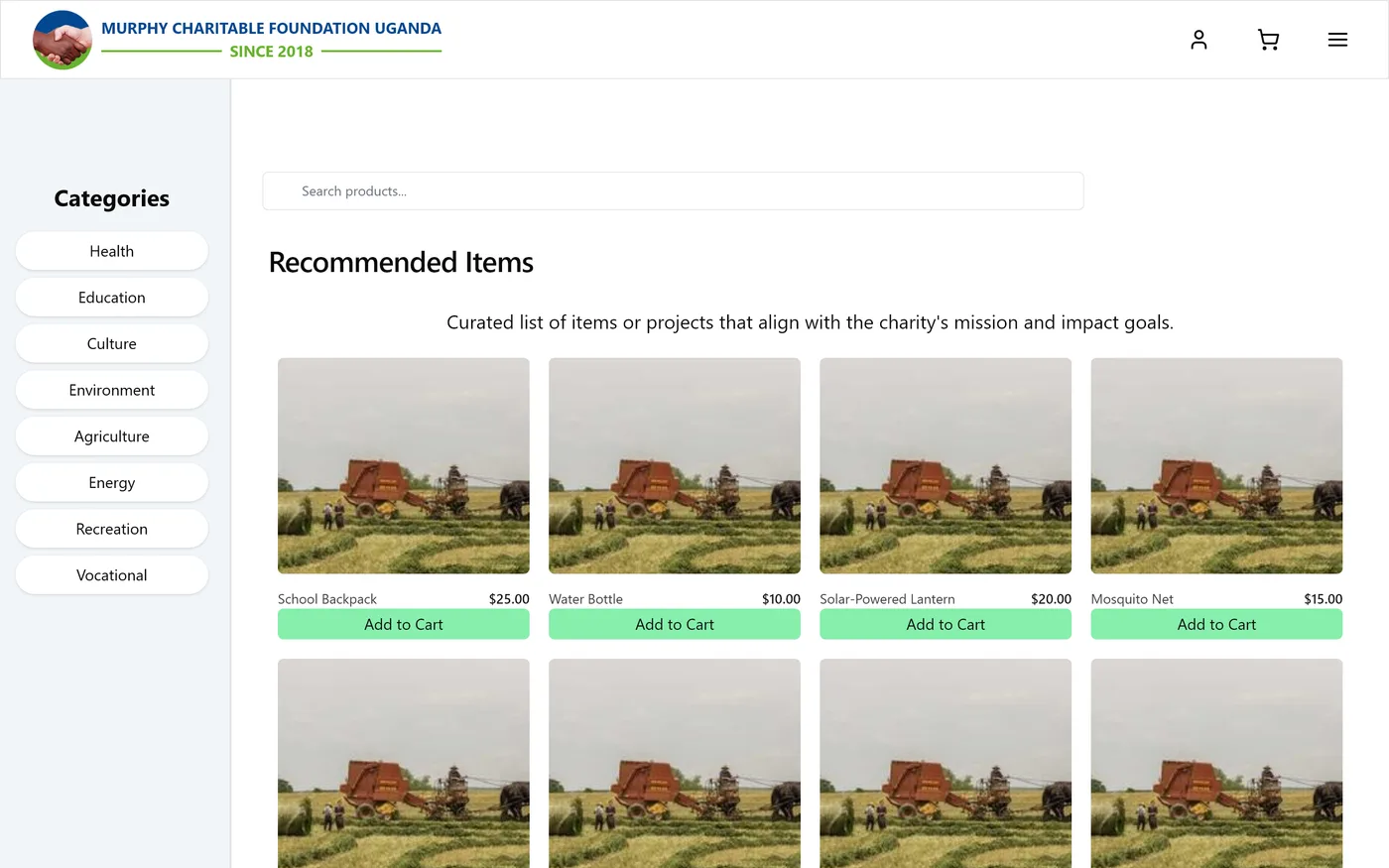
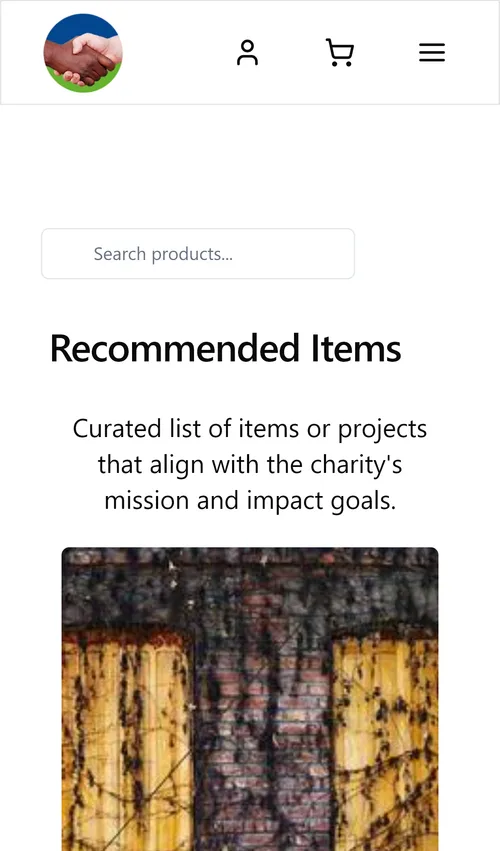
We built the shell before the content pipeline was settled, so some sections of the live site still show placeholder product data while the foundation works through cataloging. If I ran it again I would have pushed to get one real category populated end to end before building the second and third — a thin vertical slice would have surfaced the content bottleneck months earlier, when there was still volunteer capacity to help with it.
What it taught me
The hardest parts were not technical. Writing a task so that a stranger can pick it up cold and finish it without asking a follow-up question is a skill I had to learn deliberately. So is reviewing a well-meaning pull request that needs substantial rework, in a way that keeps the person contributing next month. Both transfer directly to a paid team, and both are why I would take a lead role again.